
Film type · Substrat-Spoke
Kapton® polyimide film.
Kapton® is the classic among polyimide films: no melting point, high electrical strength and usable from very low temperatures up to around 400 °C. It also withstands continuous flexing and has been the benchmark for demanding applications for decades.
Overview
What is Kapton®?
Kapton® is the classic among polyimide films and was originally developed by DuPont. At its core, it is a tough, heat-resistant film made from a high-performance plastic that differs fundamentally in thermal terms from polyesters such as PET and PEN.
The most important difference from other films: Kapton® has no melting point. It decomposes before it could become liquid, and even its glass transition lies well above the temperatures at which PET and PEN melt. No wonder, then, that it has proven itself at very low temperatures just as much as at very high ones.
Kapton® combines mechanical, electrical and dynamic properties. The film retains a large part of its strength even at high temperatures, insulates reliably thanks to high dielectric strength and high volume resistivity, and operates with low dielectric losses. Its high fold endurance ensures that flexible printed circuit boards keep working reliably even after countless movements.
The base type can be processed in many ways: it can be laminated, metallized, die-cut, formed or coated with adhesive. In addition, there are Kapton® types with an additional fluoropolymer layer that make the film sealable, shield it better against moisture and increase its chemical resistance.
Technical valuesProperties
Eigenschaften von Kapton®.
PlatzhalterInput Vertrieb
Worauf kommt es bei Kapton® in der Praxis an? Bitte im Review dieser Seite stichpunktartig notieren. Daraus entsteht der Text für diesen Abschnitt. Zahlenwerte stehen nur in der Tabelle darunter.
Technical data
Technical values, from–to.
| Property | Value | Unit |
|---|---|---|
| Thickness range | 7.5–127 | µm |
| Density | 1.42–1.83 | g/cm³ |
| Glass transition temperature | 360–410 | °C |
| Shrinkage (MD / TD) | 0.1–1.3 | % |
| Dielectric strength | 87–303 | kV/mm |
The values shown reflect the range across various film types from the manufacturer. We are happy to work with you to find out exactly which type suits your application.
We are happy to provide product-specific technical data for particular film types on request.
Variants
Kapton® variants: a selection from the portfolio.
| Type | Group | Character |
|---|---|---|
| HN | base type | Pure polyimide, general-purpose type with balanced properties over a wide temperature range. |
| HPP-ST | dimensionally stabilized | The same polyimide as HN, but with increased dimensional stability and adhesion properties; very low shrinkage even at high temperatures. |
| MT | thermally conductive | Significantly higher thermal conductivity than the base type, for thermal management in electronic assemblies. |
| FN | composite with fluoropolymer | Coated or laminated with FEP on one or both sides: sealable, with a moisture barrier and increased chemical resistance. |
Further types are available on request.
Industries in which Kapton® is typically used
Use by industry.
Automotive Industry
View industry
Public Sector, Education and Research
View industry
Chemical and Plastics Industry
View industry
Electrical and Electronics Industry
View industry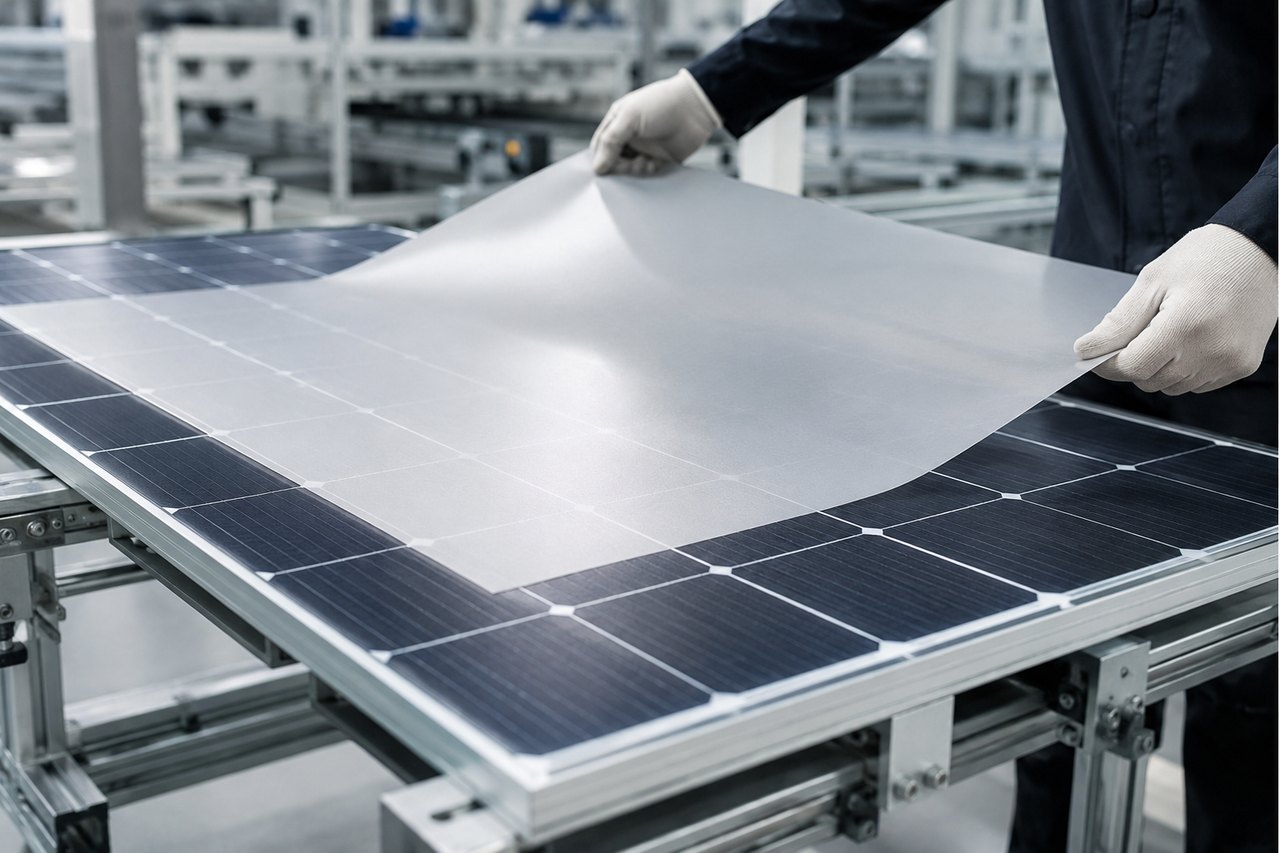
Energy Supply and Environmental Industry
View industry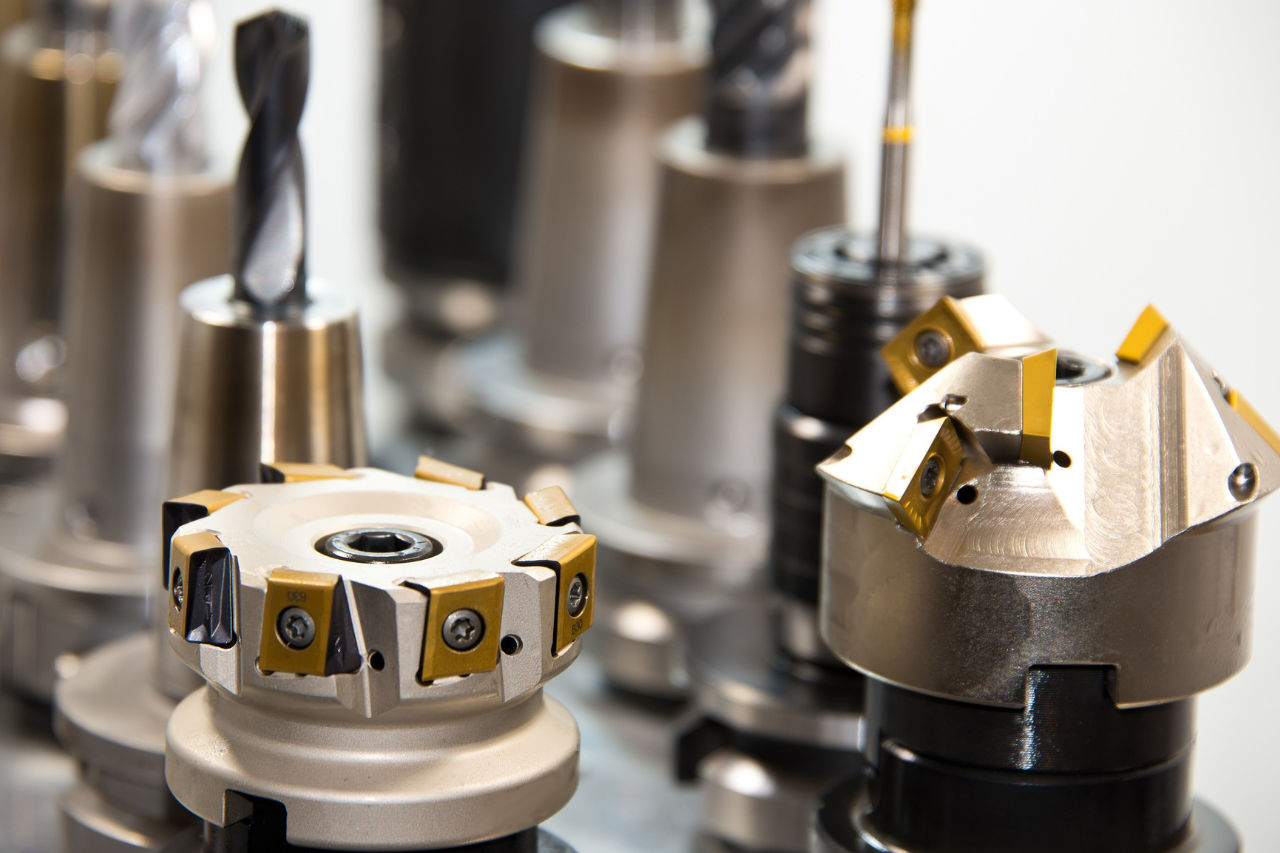
Machinery and Plant Engineering
View industry
Aerospace Industry
View industry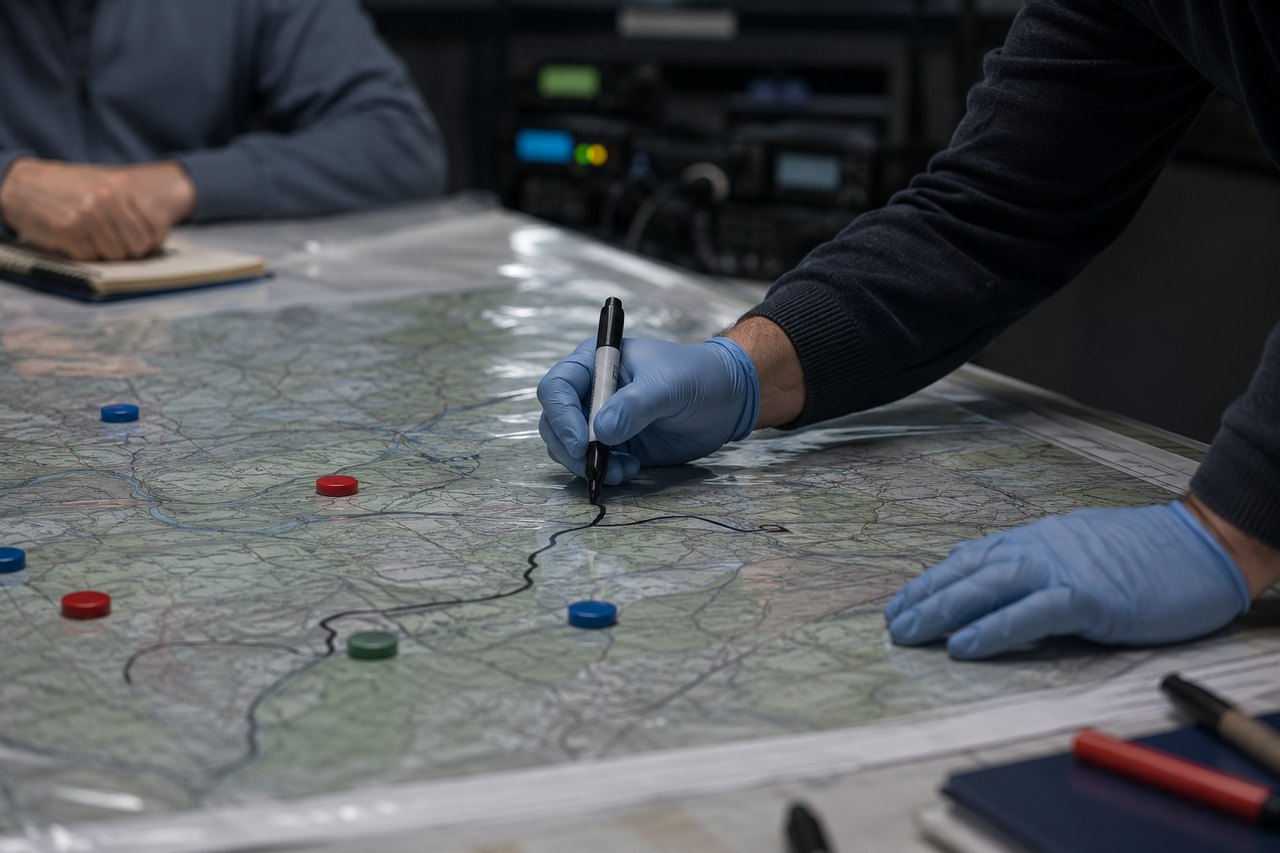
Defense and Security Industry
View industryDenkbar, im Einzelfall zu prüfen
Medizintechnik · Pharmaindustrie
Für diese Branchen ist Kapton® aus verwandten Anwendungen abgeleitet und nicht aus einer bestehenden Zuordnung übernommen. Ob das Substrat zu Ihrer konkreten Anwendung passt, klären wir vor einer Zusage. So beschreibt es die Pütz-Methode.
Converting at Pütz
Converting at Pütz.
You receive Kapton® as rolls, as sheets and cut-to-size sheets or as traverse-wound spools. For your own material, we take care of toll converting.
Polyimide is a high-value material, so trim waste carries real weight. In converting, we therefore pay particular attention to material-efficient web layout. Especially for narrow tapes and special formats, it pays to coordinate in advance.
Consulting
Consulting according to the Pütz Method.
We are happy to work out together with you which Kapton® film suits your application, following the Pütz Method.
It starts with clarifying your requirements, not with a product suggestion. The Pütz Method describes the process in nine steps.
Inquire directly
Your inquiry about Kapton®.
You receive Kapton® converted, finished and slit to your requirements: converting, finishing and toll converting.
Prefer to talk directly? Your contacts:
Juan Gomez
Sales & Project Management
T+49 6128 964-330 M+49 151 14964300 @juan.gomez@puetz-folien.com
Michael Büttner
Sales & Project Management
T+49 6128 964-315 M+49 160 8964315 @michael.buettner@puetz-folien.com
Kevin Winkelmann
Sales & Project Management
T+49 6128 964-305 M+49 176 11964305 @kevin.winkelmann@puetz-folien.comDisclaimer: The technical data, properties and areas of application stated on this page are based on information from our suppliers and on typical empirical values. They do not constitute guaranteed specifications. Production-related deviations, further developments or changes to product properties are possible at any time. Whether a film type is actually suitable for a specific purpose must be verified on a case-by-case basis. That is exactly what the Pütz Method is for: together we clarify the requirements and provide samples for your own tests. Before placing an order, please explicitly ask us about availability and current specifications. All information is provided without guarantee.
Frequently asked questions
Good to know.
At what temperatures can Kapton® be used?
Kapton® is known for temperatures from around −269 °C to +400 °C and has no melting point. However, depending on the type and application, the permissible continuous temperature is lower than this peak value. We are happy to clarify personally with you what stresses your application involves.
Is Kapton® recyclable?
There is currently no established recycling process for polyimide films such as Kapton®. The very property that makes the film so valuable – the fact that it does not melt – rules out conventional plastics recycling. Promising chemical and mechanical processes are currently being researched, and we are following this development with great interest.
May Kapton® be used in medical devices?
Kapton® is an option for many medical technology applications, for example in devices or their electronics. Implants and applications inside the body are a different matter: here, the film is not intended as standard and may only be used with the manufacturer’s express approval.
Is Kapton® suitable for food contact?
Kapton® is a high-performance technical film and is typically not designated for food contact. Other films with a corresponding declaration of conformity are available for such applications. Talk to us – we are happy to advise you on the right solution.
Is Kapton® UL-listed?
The base type Kapton® HN in thicknesses from 25 to 125 µm is rated UL 94 V-0, the highest flammability class of this standard. Since UL ratings are always tied to a specific type and thickness, we are happy to clarify the right certification with you individually.