Film type · Substrat-Spoke
PEN polyethylene naphthalate.
Biaxially oriented polyester film made of polyethylene naphthalate with high heat resistance, dielectric strength and dimensional stability.
Overview
What is PEN?
PEN (polyethylene naphthalate) is, like PET, a polyester and is biaxially oriented during film production, i.e. stretched in the machine and transverse directions.
PEN (polyethylene naphthalate) is regarded as a high-performance polyester and offers some decisive advantages over conventional PET films: higher dielectric strength, better resistance to hydrolysis and chemicals, and greater dimensional stability at rising temperatures. Since PEN also has a higher melting point than PET, PEN films are a strong alternative wherever PET reaches its limits.
Two brands in particular have established themselves on the market: Teonex® from Toyobo and Kaladex® from Mylar Specialty Films.
Technical valuesProperties
Properties of PEN.
- Higher melting point than PET
- Several heat-stabilized variants available (dimensional stability)
- High dielectric strength
- High resistance to hydrolysis and chemicals
Technical data
Technical values, from–to.
| Property | Value | Unit |
|---|---|---|
| Thickness range | 1.4–250 | µm |
| Density | 1.36 | g/cm³ |
| Glass transition temperature | 121–155 | °C |
| Melting point | 269 | °C |
| Shrinkage (MD / TD) | −0.2–3.5 | % |
| Tensile strength (MD / TD) | 190–370 | MPa |
| Dielectric strength | 113–390 | kV/mm |
The values are ranges across all types. We select the right type for your application together with you.
We are happy to provide product-specific technical data for particular film types on request.
Variants
PEN variants: a selection from the portfolio.
| Type | Brand | Character |
|---|---|---|
| Teonex® Q5100 | Toyobo | Standard type, slightly hazy, for general applications. |
| Teonex® NQ510 | Toyobo | Thin, slightly hazy type with good handling properties. |
| Teonex® Q5300 | Toyobo | Heat-stabilized, for better dimensional stability under heat. |
| Teonex® Q8100 | Toyobo | Heat-stabilized, better dimensional stability than Q5300. |
| Teonex® Q8300 | Toyobo | Special heat stabilization, very high dimensional stability. |
Industries in which PEN is typically used
Use by industry.
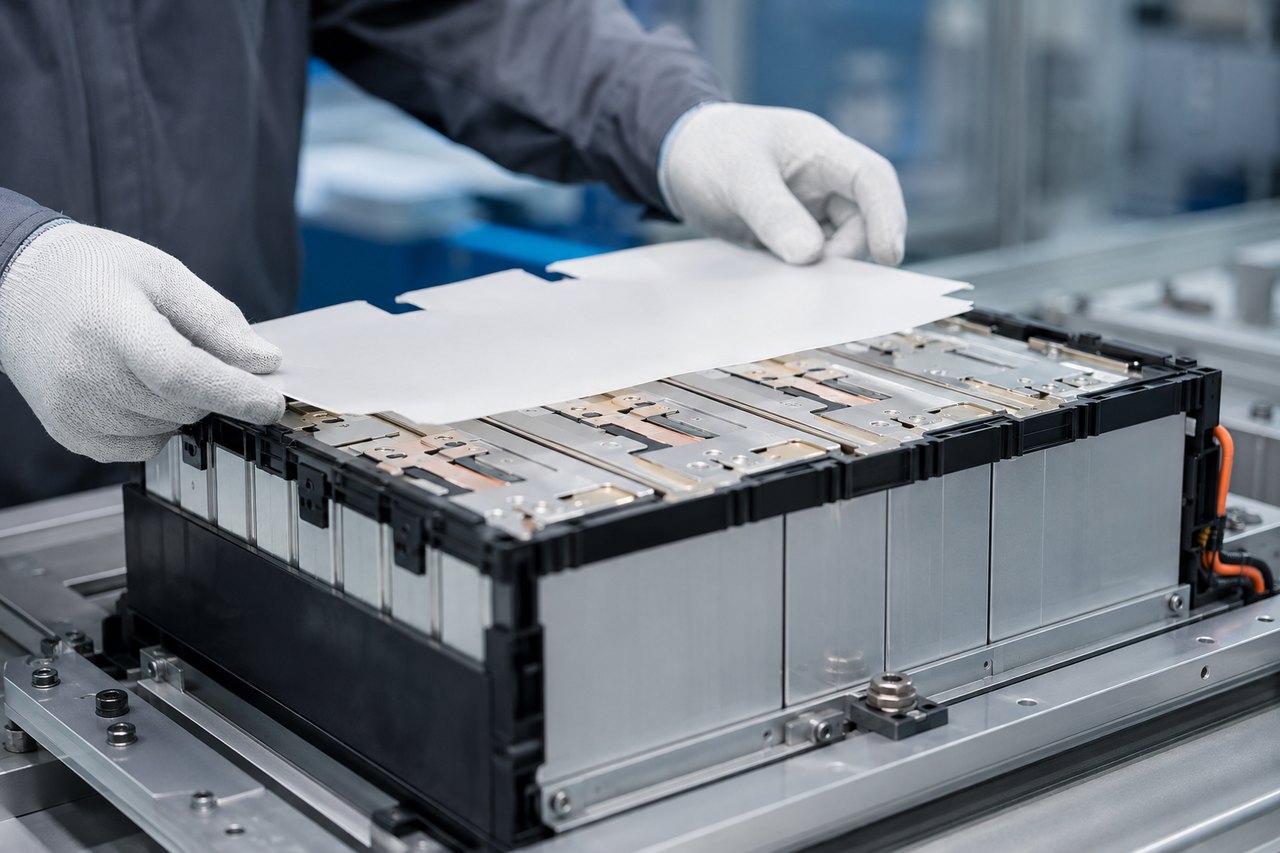
Automotive Industry
View industry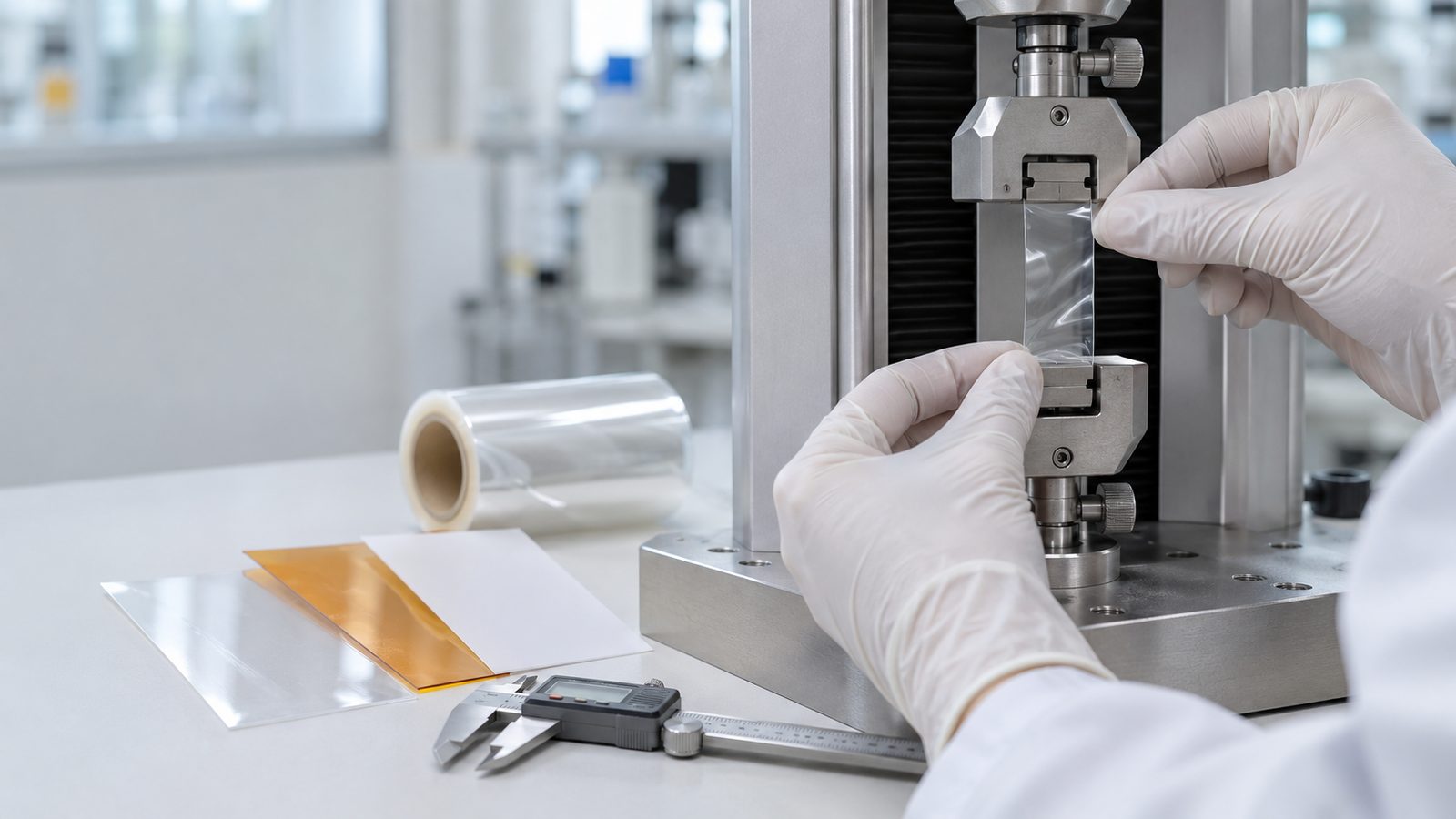
Public Sector, Education and Research
View industry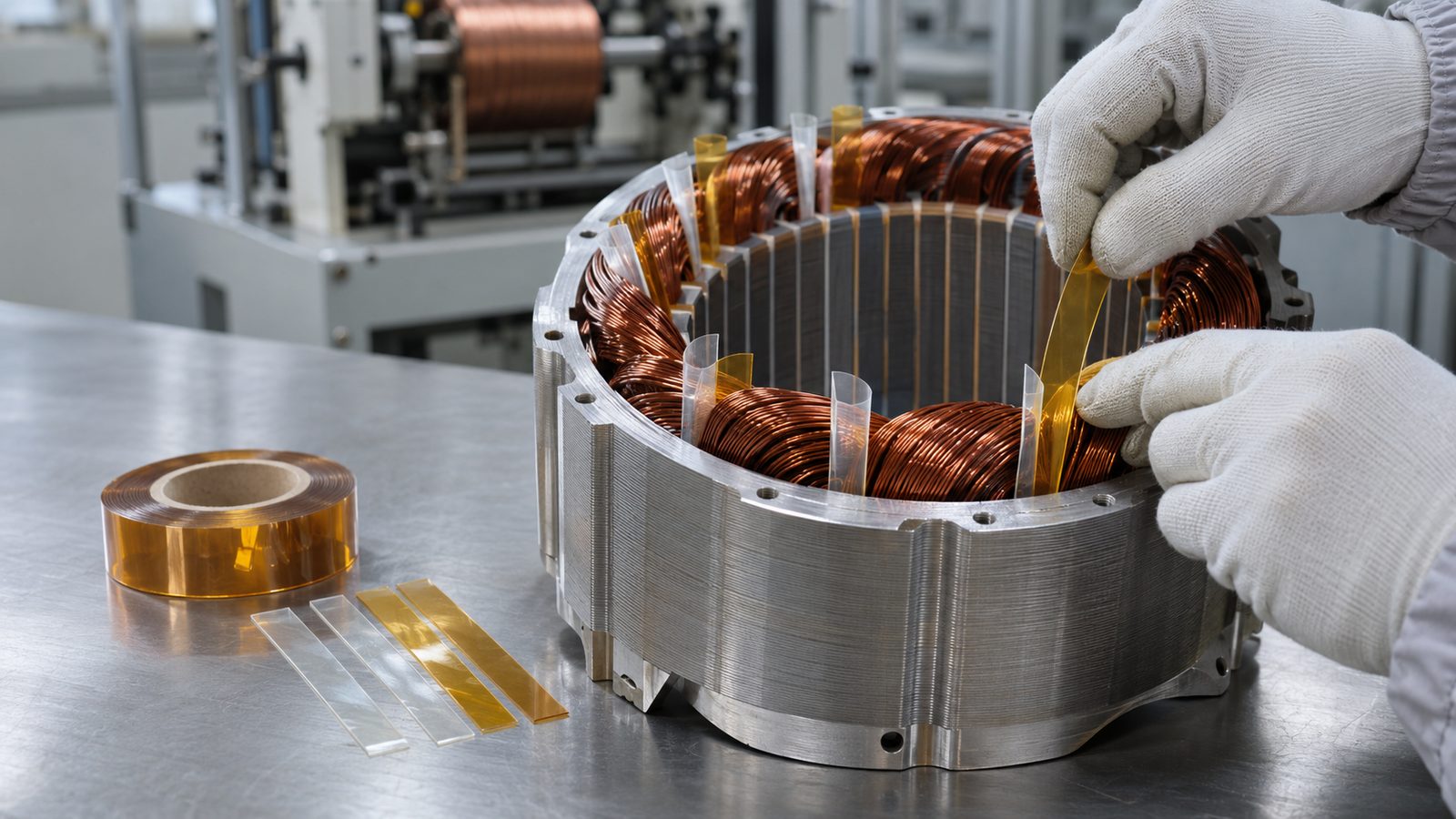
Electrical and Electronics Industry
View industry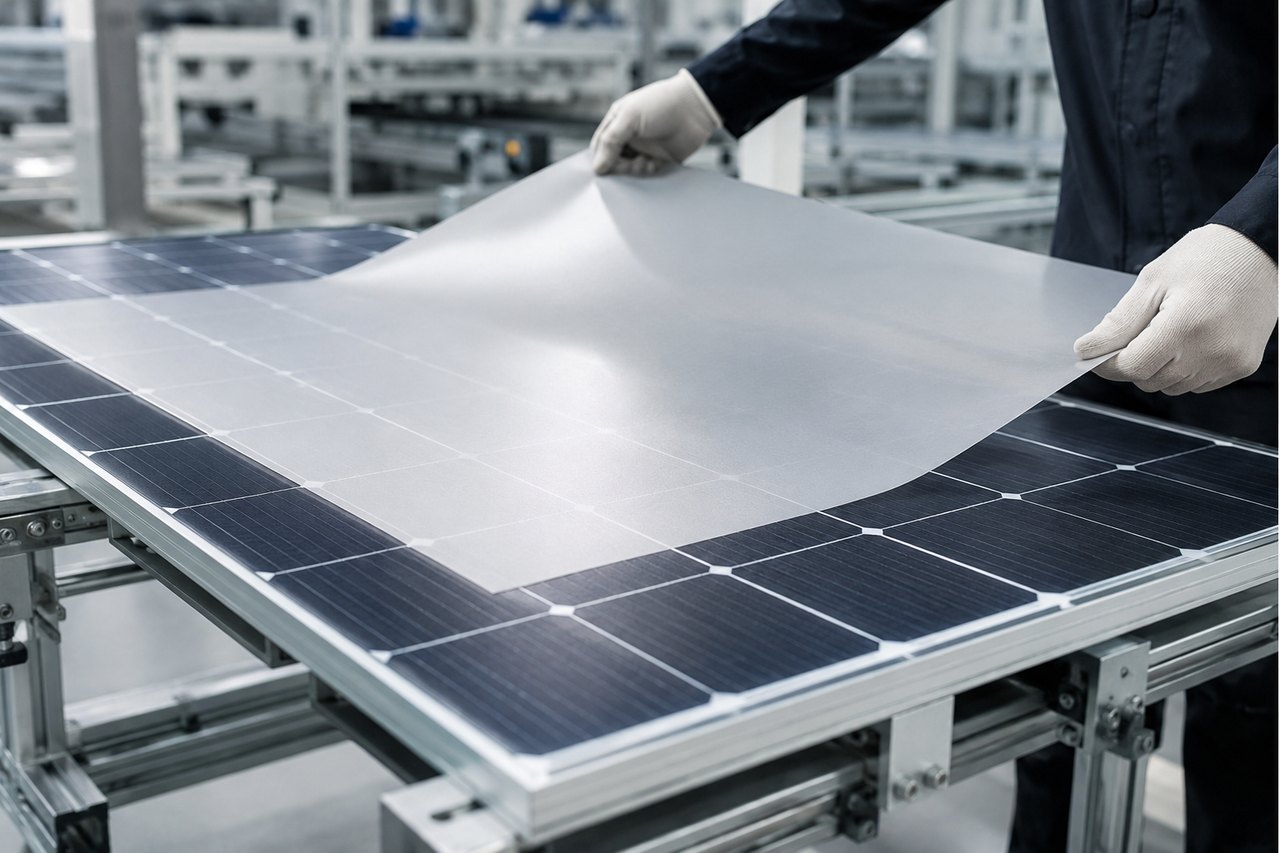
Energy Supply and Environmental Industry
View industry
Machinery and Plant Engineering
View industry
Medical Technology
View industry
Aerospace Industry
View industry
Defense and Security Industry
View industryDenkbar, im Einzelfall zu prüfen
Chemische Industrie und Kunststoffindustrie · Pharmaindustrie · Sportartikel- und Spielwarenindustrie
Für diese Branchen ist PEN aus verwandten Anwendungen abgeleitet und nicht aus einer bestehenden Zuordnung übernommen. Ob das Substrat zu Ihrer konkreten Anwendung passt, klären wir vor einer Zusage. So beschreibt es die Pütz-Methode.
Converting at Pütz
Converting at Pütz.
You receive PEN films as rolls, as sheets and cut-to-size sheets or as traverse-wound spools. For your own material, we take care of toll converting.
Do you have an individual requirement? Talk to us: we are glad to take time for your project and find the right solution together.
Consulting
Consulting according to the Pütz Method.
We are happy to work out together with you which PEN film suits your application, following the Pütz Method.
It starts with clarifying your requirements, not with a product suggestion. The Pütz Method describes the process in nine steps.
Inquire directly
Your inquiry about PEN.
You receive PEN converted, finished and slit to your requirements: converting, finishing and toll converting.
Prefer to talk directly? Your contacts:

Juan Gomez
Sales & Project Management
T+49 6128 964-330 M+49 151 14964300 @juan.gomez@puetz-folien.com
Michael Büttner
Sales & Project Management
T+49 6128 964-315 M+49 160 8964315 @michael.buettner@puetz-folien.com
Kevin Winkelmann
Sales & Project Management
T+49 6128 964-305 M+49 176 11964305 @kevin.winkelmann@puetz-folien.comDisclaimer: The technical data, properties and areas of application stated on this page are based on information from our suppliers and on typical empirical values. They do not constitute guaranteed specifications. Production-related deviations, further developments or changes to product properties are possible at any time. Whether a film type is actually suitable for a specific purpose must be verified on a case-by-case basis. That is exactly what the Pütz Method is for: together we clarify the requirements and provide samples for your own tests. Before placing an order, please explicitly ask us about availability and current specifications. All information is provided without guarantee.
Frequently asked questions
Good to know.
What is the difference between PEN and PET?
Both are polyesters and are processed in a similar way. PEN has a higher melting point, achieves a significantly higher dielectric strength at the same thickness and expands less when heated. Manufacturers also state better hydrolysis and chemical resistance.
What is PEN used for?
PEN films are used wherever high thermal and electrical resilience is required: for example in capacitors, motors and transformers, in flexible printed circuit boards and flat ribbon cables, and in fuel cells. PEN is also suitable for applications with high requirements for dimensional stability.
In which thicknesses are PEN films available?
PEN films are available in a wide range of thicknesses, from very thin capacitor types to heavier grades for technical applications. Our focus is in the range of 12 to 250 µm. Do you need a thinner variant? We are glad to source it for you. You can find an overview of all values in the table “Technical values, from–to” on this page. We are happy to discuss with you personally which thickness best suits your application.
Is PEN suitable for food contact?
We are currently not aware of any PEN film approved for food contact. For applications in this area, we therefore generally recommend other substrates. Please talk to us anyway: we will review your request individually and find a suitable solution together with you.
Is PEN available with recycled content?
We are not yet aware of any PEN film with recycled content. PEN is a specialty polyester produced only in comparatively small quantities. Although it can be recycled in principle, in practice this is considerably more complex than with PET, because there is no dedicated collection and sorting structure and PEN tends to interfere with the PET recycling stream. There is therefore no established recycling loop as there is for PET. Do you still have questions about sustainability? We are glad to review your request individually and advise you on possible alternatives.