Industry · Entwurf · Vertriebsfreigabe offen
Films for the food and beverage industry. From packaging to process.
From the window in a folding carton to the release film in the baking process to confectionery wrapping: the food industry uses films in very different ways. For all of these applications, from packaging films to process films, you get the right solution based on the suitable substrate.
From packaging film to process film.
For all applications in the food industry, from packaging films to process films, we offer the right solution based on the suitable substrate. We supply all films for food contact with the corresponding declaration of conformity and the required documentation.
Then there is the second half of the business: process films that do not touch the food but keep production running – release layers in the baking process, interleaves, small rolls for the packaging line.
Fields of application
Applications in the Food and Beverage Industry. With hands-on support.
The Pütz classification lists twenty fields of application for the food and beverage industry. Seven are described in detail here; you will find the complete list below.
Food packaging with direct contact
All films for food contact are supplied with the corresponding declaration of conformity and the required documentation.
Windows for folding cartons and cardboard packaging
Windows in a cardboard packaging unit that present the packed product as if on a display: high transparency and clarity can replace a printed image.
Release films for baking molds and baking processes
Release and process films in bakery operations. They have to withstand the oven temperature, release cleanly and be suitable for food contact. These are three requirements that not every material meets at the same time.
Confectionery and candy wrapping
VFFS, HFFS and wrapping films for the confectionery industry, in various grades as required. Films with and without barrier properties and, for candy wrapping, with the appropriate twist behavior.
Meat and sausage packaging
Films for fresh packaging for the cheese and meat industry, both for the packaging process (such as interleaves and interleavers) and for the complete package: thermoforming films, barrier films and sealing films made of a wide range of substrates, with and without peel.
Lamination and laminates for food packaging
Multilayer film laminates that combine different properties in their structure: sealability, printing, a barrier against oxygen exchange, aroma loss, moisture or mineral oils. You receive the corresponding substrates and, on request, prefabricated film laminates for further processing.
Interleaves and interleavers
Release layers or separating layers made of different substrates in different optical versions (transparent, matte, opaque or metallized) for stacked cut-to-size sheets or die-cut parts, with interleaving paper on request. Neatly stacked, easy-to-remove cut-to-size sheets for a wide variety of applications, both food and non-food.
13 more fields of application in this industry
Expand for details on each field.
Baking agents and baked goods
Packaging and process films for baking agents and baked goods, from bag packaging to the interleaf in the refrigerated dough process.
Clips and closures
Film materials for closure elements and clips. Dimensional stability and behavior on high-speed closing machines determine the selection here.
Beverage packaging
Label, banding and wrapping films for beverages. Wet strength and resistance to condensation are the critical factors for chilled products.
Grip protection and carrying handles
Reinforcement and handle solutions on packaging units. The film has to absorb tensile forces without tearing at the perforation.
Small rolls for food packaging
Converting to the roll dimensions your packaging line needs: web width, core and roll diameter to suit your equipment instead of a standard roll.
Food labels and labeling
Label materials for food that withstand moisture, refrigeration and cleaning while remaining legible. Approval status is checked per type.
Smoking and food processes
Process films in smoking and ripening processes. They have to withstand the process conditions while offering the required permeability or tightness.
Loops and carrying handles
Tape materials for loops and handles on packaging. Tear resistance at the attachment point determines whether the unit survives transport.
Sports nutrition and dietary supplement packaging
Pouch and sachet films for powders, bars and capsules. Aroma and moisture barriers are the priority here, along with printability for a competitive shelf.
Confectionery packaging
Packaging films for confectionery beyond individual wrapping: bags, folding carton windows, overwraps. Appearance and machinability are equally important.
Tobacco packaging
Overwrap and inner films for tobacco products. In addition to barrier and appearance, processability on very high-speed packaging lines counts here.
Release films for food processes
Release layers in food production that touch the product. Release performance and approval status have to be right at the same time. This narrows the selection considerably.
Wine and sparkling wine packaging
Films for capsules, banding and outer packaging in the wine and sparkling wine sector. Look and feel are part of the product promise here.
Suitable films from the Pütz portfolio
Suitable substrates for this industry. We make the selection with you.
Polyolefins and polyesters dominate food packaging, complemented by cellulose and biopolymer films for compostable applications.
| Substrate | Typical use in this industry | |
|---|---|---|
| BOPPbiaxially oriented polypropylene | Wrapping, bags and windows in flexible packaging | Substrate page → |
| Hostaphan®BOPET polyester film, biaxially oriented polyethylene terephthalate | Laminate structures, lidding films and process applications | Substrate page → |
| NatureFlex™cellulose film | Certified compostable packaging solutions | Substrate page → |
| Cellophaneregenerated cellulose | Classic wrapping with characteristic permeability | Substrate page → |
| Nativia®BOPLA film, biaxially oriented polylactic acid | Bio-based alternative in the packaging structure | Substrate page → |
You will find an overview of all materials under Film Types & Substrates.
Complete assignment: substrates and film types
The assignment shows which substrates are used in this industry. It does not say which one is right for your application. For almost every task, several films are options; which one fits depends on the specific requirement. The Pütz Method describes how we clarify this.
Typical challenges
What matters in this industry.
What should be considered in the food industry, and which solutions we offer.
Conformity and evidence
You receive the declarations of conformity, documentation and certificates you need.
Barrier and shelf life
A barrier protects against spoilage. With barrier films, the cost comparison should always go hand in hand with a possible extension of your best-before date. The comparison pays off.
Machinability
Modified sliding friction and improved machinability increase your efficiency and enable high production speeds.
Recyclability
Almost every film can be recycled after use and returned to the material cycle. We are happy to advise you.
Documentation
Declarations of conformity and batch records for audits.
Small rolls and special formats
We also produce more unusual roll and special formats for you, each tailored to your application and your process.
Why Pütz Folien
Development partner. From the first sample to series production.
We supply you with the right substrate for your process and your application, including all necessary documentation.
More than 65 years of experience in film converting.
For more than six decades, we have been converting and finishing films. All customers benefit, directly or indirectly, from this experience with tight tolerances and documented processes.
One portfolio for almost every requirement.
From technical specialty films to material composites and individual converting solutions: as a converter for several manufacturers, we offer a wide range of options and give neutral advice on which film suits your application.
Individual development for your application.
Every application is different. We adapt material, converting, quality requirements and services to your requirements, including small quantities and special formats. Because successful projects also depend on collaboration, we value clear contacts, fast response times and pragmatic solutions.
The Pütz Method
Together to the right film. In nine steps.
Which film is right for your application depends on your specific requirements. That is exactly what the Pütz Method is for: from the first question through samples and testing to series delivery. Folio shows how it works.
The Pütz Method in detail
-

I know what the film has to do. But which film is the right one?
1 Starting point
-
Don’t worry, Dr. Meier! That is exactly what the Pütz Method is for.
2 Getting started
-
First, we clarify all the important requirements together.
- Application
- Properties
- Material
- Dimensions
- Processes
- Quantity
- Quality
3 Clarifying requirements
-
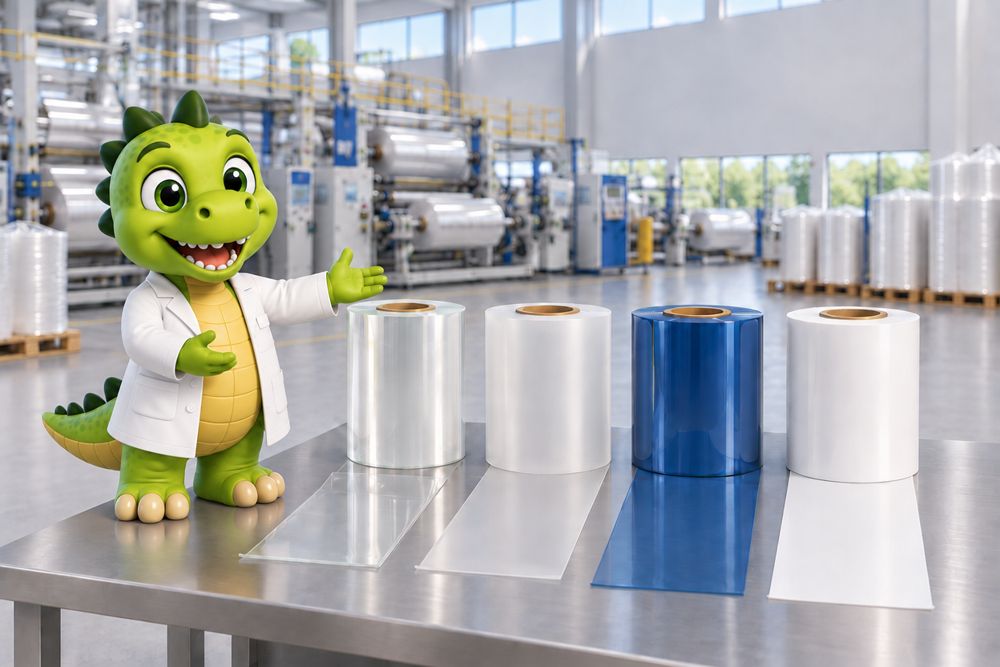
On this basis, we propose suitable film solutions to you.
4 Proposed solution
-
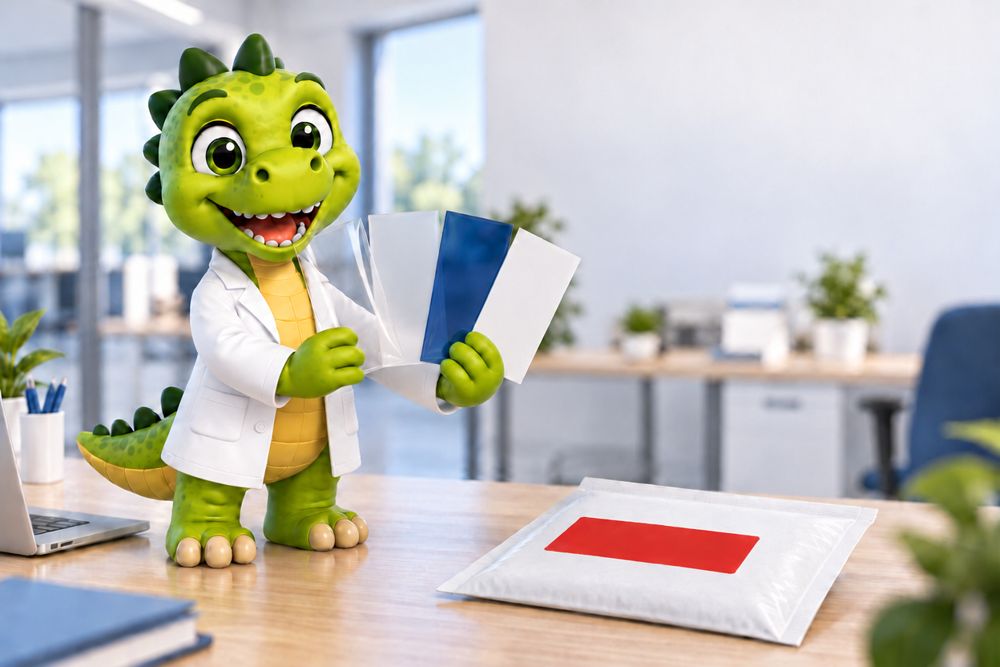
If needed, you receive samples, sample rolls or cut-to-size sheets to test for your application.
Samples
5 Samples
-
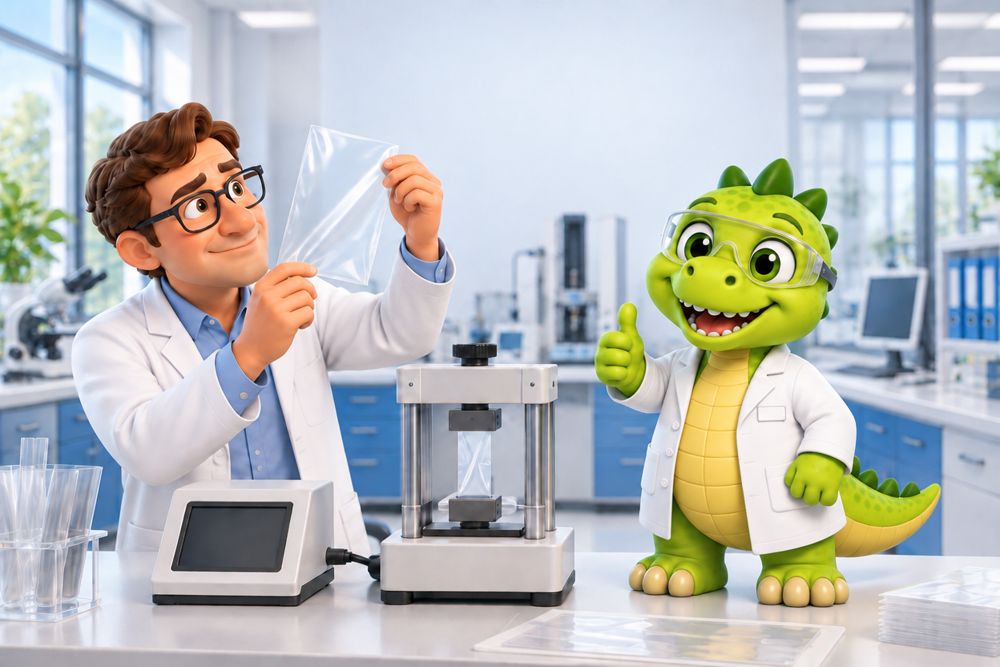
You test the film samples. We discuss the results together.
6 Testing and evaluation
-

After the successful test phase, you receive a suitable quotation. Together, we find the best solution for you.
Quotation
- Material
- Dimensions
- Quantity
- Delivery time
- Price
7 Quotation
-
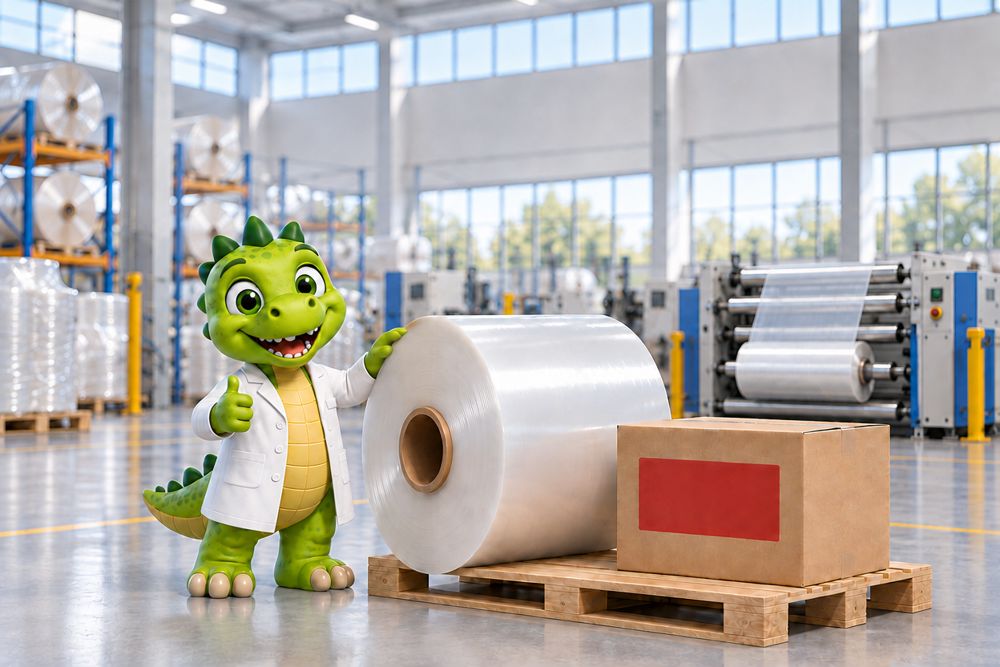
On request, we deliver a pilot quantity or pre-series for final testing under real production conditions.
Pilot quantity
8 Pilot quantity
-
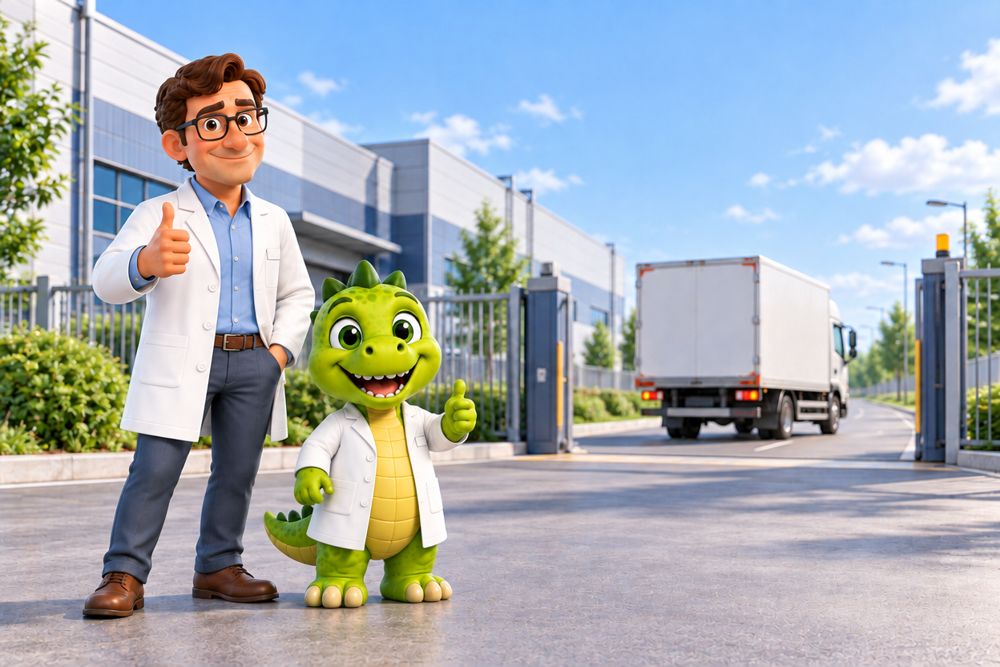
After approval, we reliably deliver your series goods. And even after that, we remain your partner for further optimization.
9 Series and partnership
Your contacts
Your application. Our next step.
For Food & Beverage, these colleagues are your dedicated contacts, from the first question to series delivery.
Inquire directly
A task in food production? Let’s talk about it.
Describe the substrate, application and format. We will get back to you promptly.
Disclaimer: The technical data, properties and areas of application stated on this page are based on information from our suppliers and on typical empirical values. They do not constitute guaranteed specifications. Production-related deviations, further developments or changes to product properties are possible at any time. Whether a film type is actually suitable for a specific purpose must be verified on a case-by-case basis. That is exactly what the Pütz Method is for: together we clarify the requirements and provide samples for your own tests. Before placing an order, please explicitly ask us about availability and current specifications. All information is provided without guarantee.
Frequently asked questions
Good to know.
Are your films food-safe?
This cannot be answered for a material class, only per type. Within the same brand, some types are designated for food contact and others expressly not, sometimes because of their specific finish. For your application, we check the approval status of the specific type and provide the declaration of conformity.
Which film is suitable for windows in folding cartons?
What is needed is transparency, flatness and processing behavior that suits the window patching machine. Options include BOPP, polyester and cellulose films. A test with samples shows which combination runs on your line.
Are there compostable films for food packaging?
Yes. NatureFlex™ is certified to EN 13432, and home composting and anaerobic digestion have also been demonstrated. An important distinction: Cellophane™ comes from the same manufacturer but is not compostable. The certifications apply expressly only to NatureFlex™.
Do you supply small rolls for our packaging line?
Yes. You receive web widths from 4 to 2,500 mm on the core and with the roll diameter your equipment needs: core inner diameters from 25 to 152 mm, outer diameters up to 1,200 mm.
What about recyclable packaging films?
As a pure polyolefin film without foreign layers, BOPP is a 100% recyclable mono-material; several manufacturers carry types intended to replace barrier laminates. Whether a finished package ends up in the recycling stream, however, depends on the entire structure. Coating, printing and combined materials change the picture.
Do you also handle lamination?
Yes, as part of our finishing offering. We clarify which processes and working widths are possible for your structure on an application-specific basis.